Physical Address
304 North Cardinal St.
Dorchester Center, MA 02124
Physical Address
304 North Cardinal St.
Dorchester Center, MA 02124

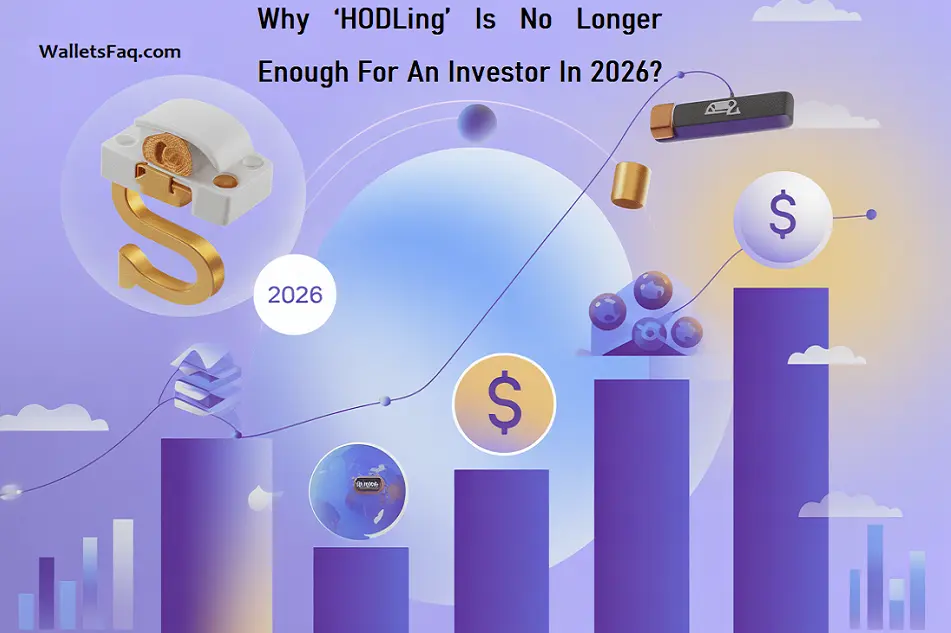
When we take a look at the early years of the cryptocurrency marketspace, investing simply meant buying digital assets and holding them for a longer duration to enjoy significant price appreciation. This is one of the strategies that gained enough recognition back in the years and has been known by the name “HODLing.” This became pretty synonymous with patience and belief that people hold in blockchain technology. Those who adopted major crypto assets at the early stage of their release had been rewarded for the same because of the expansion of the market and their adoption at a global scale.
As of this year, 2026, the crypto ecosystem has completely changed and has turned out to be more of a sophisticated financial atmosphere. dApps, tokenized real-world assets, regulated trading platforms, and institutional investors have completely transformed how we used to visualize the crypto marketspace. Earlier, it was just a speculative experiment and now it has transformed into a structured investment space.
You will get to see that the market movement is now responding, not only to the hype, but also to the liquidity trends, technological performance, as well as macroeconomic factors. Due to the maturity of the market, passive holding alone is no longer enough. Investors should adopt all the strategies that are similar to those which are used in traditional finance. This should combine long-term conviction with active decision-making. Besides HODLing, it is now time to take a look at some other strategies, such as Dollar-Cost Averaging (DCA) in Crypto and so on.
When we take a look at the crypto trading market that is operational today, we get to find out that a lot has changed since it first came into existence. Therefore, this section of the article will define the key challenges that come along with token saturation. Here they are:
All of these factors collectively lead us to think that investors should not rely on long-term holding. This gives way to the risk of getting stuck with inactive or outdated projects. If you wish to be a successful investor, you should give heed to learning more about portfolio re-assessment/strategic rotation.
Another key reason why HODLing is counted to be an outdated investment strategy is that many other income generating opportunities have taken birth into the blockchain ecosystem. Crypto assets are supposed to do more than just sit idly in crypto wallets. Modern-day investors are actively using other strategies to generate returns on their holdings. Here are some of those strategies:
These strategies are enough to make sure that you get to extract more benefits out of your cryptocurrency investments. In 2026, successful portfolios are considered to be only those that come with appreciation potential and constant yield generation.
Conclusion:
I hope this read has given you enough details on what should be done besides HODLing to extract more benefits of your crypto holdings. Besides that, I would recommend that you diversify your assets across multiple blockchains, allocating a portion of your capital to the stable assets, and setting exposure limits for high-risk tokens. Lastly, during major market shifts, do not forget to balance your portfolio.
If you see a lack in the development of your crypto’s blockchain, it is high time that you should sell it or use other investment strategies.
If you wish to see a short-term capital gain or loss, you should sell it before or within one year and the same goes for long-term holding.
If you see a 5 to 10% profit in its value, there is no harm in selling it.
“Bitcoin halving” is one such event that cuts the circulation of BTC every four years, which influences the crypto market a lot.