Physical Address
304 North Cardinal St.
Dorchester Center, MA 02124
Physical Address
304 North Cardinal St.
Dorchester Center, MA 02124

If cryptocurrency security is your primary concern as a crypto trader, I am sure this blog will help you choose the best storage for your assets. Since we have several cold and hot crypto wallets to choose from, decision making can be a bit tough. Just in case you are looking for a way to figure out which wallet you wish to go ahead with, you have landed on the right page.
Now, let’s analyze each wallet one by one.
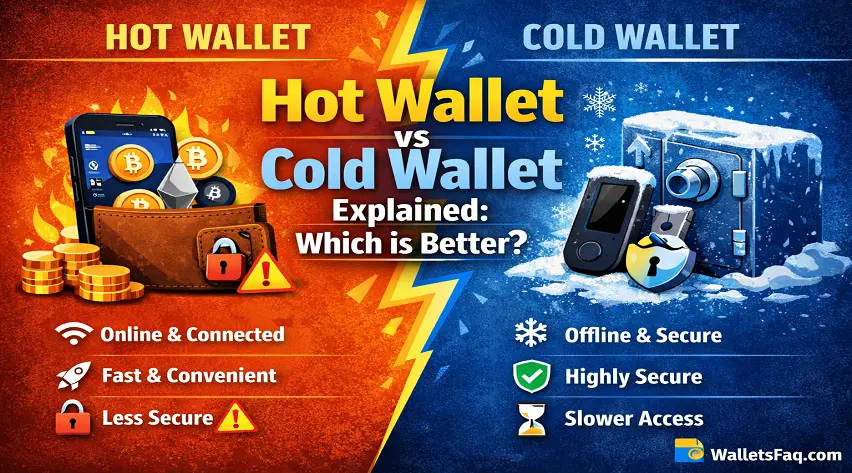
In simple terms, we can say that a hot crypto wallet is a cryptocurrency wallet that is connected to the internet. Such wallets are usually available as mobile apps, desktop software, or web-based platforms. Besides that, these wallets are easy to use and allow quick access to your funds. This is the reason why active traders often choose this wallet, as it allows them to carry out daily transactions. Moreover, it helps users interact with decentralized applications (dApps). The best examples of hot wallets:
The only downside of this wallet is that it is always online, making it more vulnerable to hacking, phishing, and malware attacks.
To put it simply, we can say that it is a cryptocurrency wallet that is not connected to the internet. It keeps your private keys offline, making it much more secure than any other crypto wallet. Generally, these wallets are mainly used for long-term storage of cryptocurrencies. Some of the best cold wallets are:
Because they are offline, cold wallets are highly resistant to cyberattacks, but they may be less convenient for frequent use.
| Wallet feature | Hot wallet | Cold wallet |
| Internet connection | Always connected to the internet | Offline |
| Security | Lower | Very high |
| Convenience | Highly convenient | Not easy to use |
| Usage | Best for daily transactions | Best for long term storage |
| Risk level | Vulnerable to hacking | No to low hacking risk |
Whether you should go ahead with a hot wallet or a cold wallet, the choice is completely yours and depends on your wallet requirements. In my opinion, active traders should choose a hot wallet. On the other hand, long-term investors should choose a cold wallet. You can also choose a combination of both wallets. The best thing that you can do is keep a small amount in a hot wallet and store the majority of your holdings in a cold wallet.
When it comes to comparing a hot wallet vs cold wallet, the obvious winner is definitely a cold wallet. However, this does not mean that a hot wallet is not competent enough. You may choose a hot wallet if you are an active trader. On the other hand, for large volume storage, a cold wallet is the perfect choice. By choosing the right wallet or combining both, you can ensure your digital assets remain safe while still being easily accessible when needed.
Yes, many users keep a small amount in a hot wallet for daily use and store the rest in a cold wallet for safety.
Most hot wallets are free, but you may still need to pay blockchain transaction fees.
Cold wallets are very secure, but they can still be compromised if someone gets physical access to your recovery phrase.
Paper wallets are secure offline but risky if damaged, lost, or generated improperly.
Disclaimer: This content has been published with the aim of providing information to visitors. Do not consider this to be any kind of financial advice. Since cryptocurrency is highly volatile, we recommend that you “Do Your Own Research” before investing.