Physical Address
304 North Cardinal St.
Dorchester Center, MA 02124
Physical Address
304 North Cardinal St.
Dorchester Center, MA 02124

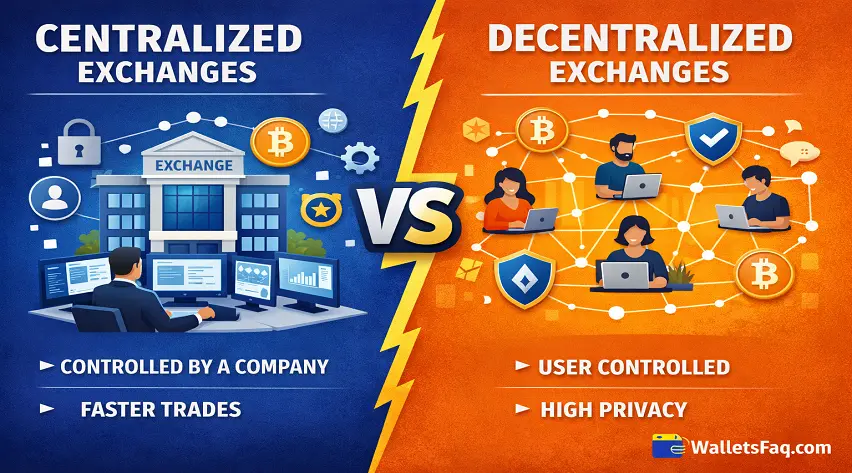
Knowing the complete difference between a centralized and a decentralized crypto exchange is pretty essential if you are stepping into the crypto trading world. And this article does just that. Well, to put it short, these are the two major ways to trade digital assets. Though both can be used for buying, selling, and trading crypto assets, the main difference between them is how they operate. Once you understand more of its differences, decision-making will be easier for you.
These are the platforms managed by companies that act as intermediaries between buyers and sellers. For example, platforms like Coinbase, Binance, and Kraken work as intermediaries when you buy any crypto through these exchanges since they are not the direct sellers. Some core features of the centralized exchanges are as follows:
However, there is a downside to using centralized exchanges. Yes, you will not be able to fully control your crypto. Instead, these exchanges hold the custody of your funds, which may be quite risky.
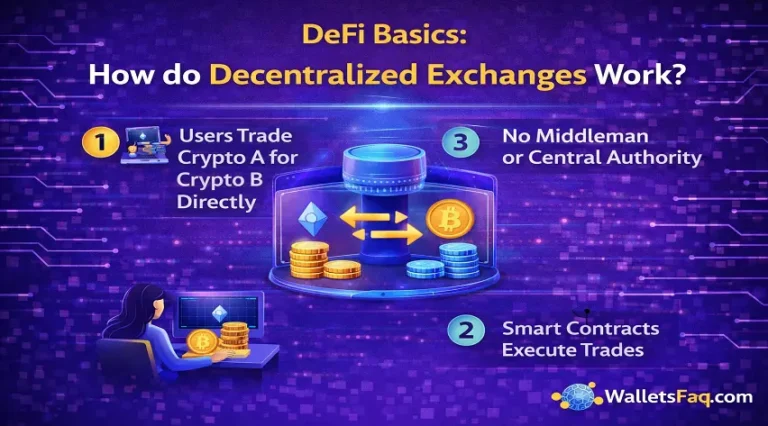
As evident from the name itself, these are the exchanges that operate without the involvement of a central authority. They completely depend on blockchain technology and smart contracts to carry out trade amongst users. Platforms like SushiSwap, PancakeSwap, and Uniswap allow you to trade directly. Some core features of the DEXs are:
However, one thing worth noting here is that DEXs can be more complex and may lack customer support if something goes wrong.
| Comparison basis | Centralized exchange | Decentralized exchange |
| Control over funds | Exchanges have control over your assets | You have full control over your private keys/funds |
| Security | It may be vulnerable to hacks but is mostly insured | More secure, but there can be risks with smart contracts |
| Usability | Beginner-friendly platform | May need some level of knowledge and skills |
| KYC/Regulation | Identity verification is necessary | No KYC |
| Liquidity/ Speed | Offers high liquidity for faster trade execution | Usually the liquidity is lower (depends on pool) |
Whether you should go ahead with a centralized exchange or a decentralized exchange depends on your needs as well as your experience level. Well, you can choose a Centralized exchange (CEX) if you are new to crypto and wish to be involved in a simple yet secure trading experience. On the other hand, you may choose a Decentralized Exchange (DEX) if you are looking for privacy and control, have used crypto wallets already, and wish to access DeFi/new tokens.
Both have their own advantages and disadvantages, which means you can use a mix of both.
Well, the top three exchanges are the centralized exchanges, which include Kraken, Binance, and Coinbase.
In a centralized exchange, the exchange controls your funds. While in a decentralized exchange, you control your funds via your wallet.
While a centralized exchange is more vulnerable to hacks due to centralized storage, a decentralized exchange is safer from large-scale hacks but depends on smart contract security.